
SEE ALL
DANISH CORD
RUSH
WICKER
SEE ALL
Danish CordNot all furniture is done with upholstery! We re-cord and reweave all types of Danish corded furniture. Danish cord was widely used for furniture in the 1940’s – 1960’s, due to it’s elegant design and longevity. Get a quote to re-cord your furniture! read more » |
 |
RushThe rush technique uses either natural cattail leaf rush, bulrush or man-made paper fibre rush and is woven around the four seat rungs or dowels, forming four distinct triangles in the seat pattern. Get a quote to re-rush your furniture! read more » |
 |
WickerWicker caning is the most widely used type of caning. We re-cane furniture using all types of wicker design, including the Traditional Weave, Modern Open Weave and Modern Closed Weave. Get a quote to re-cane your furniture! read more » |
DANISH CORD
Not all furniture is done with upholstery! We re-cord and reweave all types of Danish corded furniture. Danish cord was widely used for furniture in the 1940’s – 1960’s, due to it’s elegant design and longevity. Get a quote to re-cord your furniture!
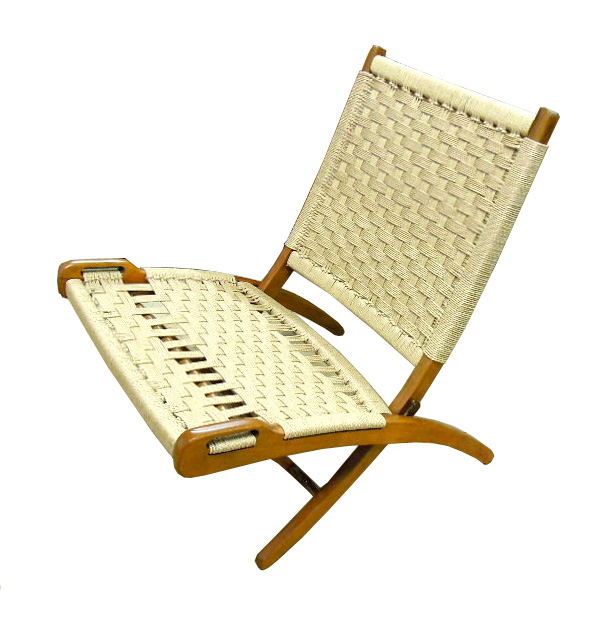 Danish cord is a beautiful weave. Renowned designers such as Hans Wegner & Neils Møller designed some beautiful furniture pieces, including the Rope Folding Chair ($1300 to re-cord), CH24 Wishbone Chair ($495 to re-cord), and the Møller #71 or #79 Dining Chairs ($575 to re-cord).
Danish cord is made of a 1/8″ 3-ply twisted paper. The “finish” of the paper is the finish of the seat, and does not require any shellac or varnish.
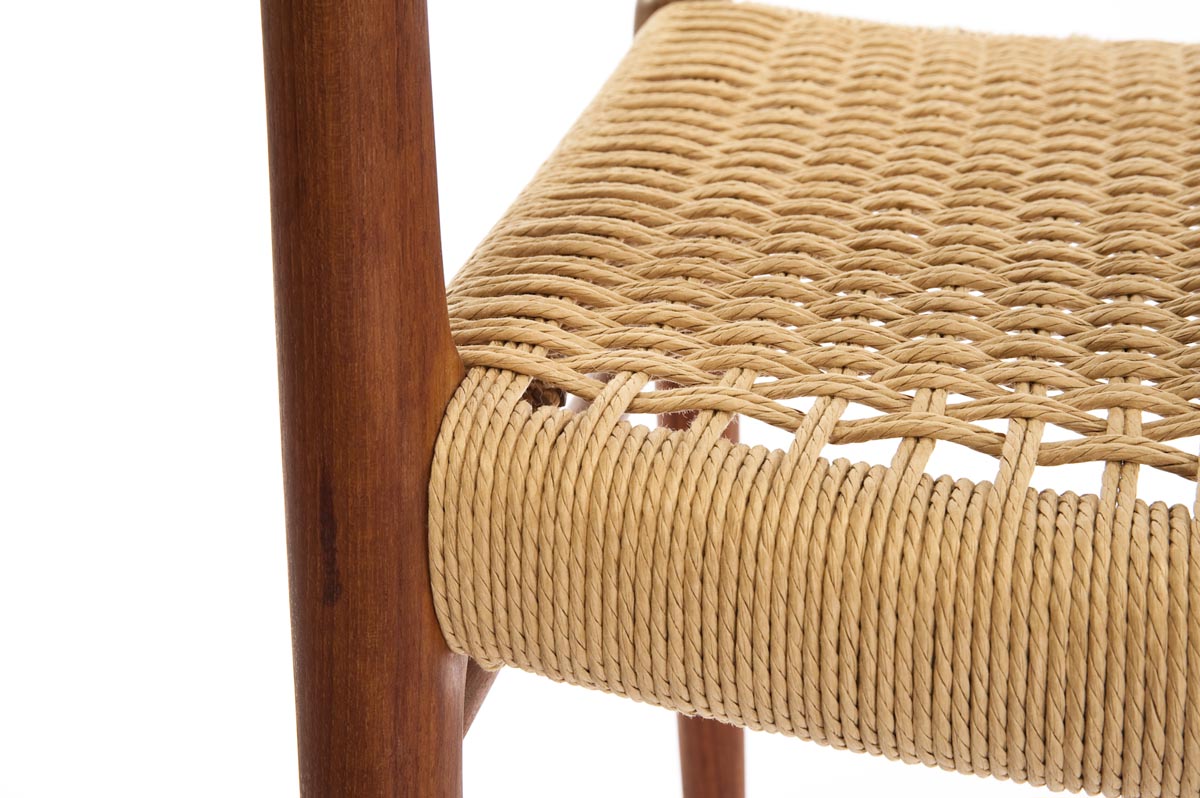
Danish cord is similar to fiber rush in that it is made from a heavy kraft paper, but it is twisted or roped more tightly, in a slender strand, and is waxed to give it a smooth look and feel. Patterns used on danish corded furniture are unique to the style, the most common of which is the basketweave pattern illustrated on this Rope Chair by Hans Wegner.
Danish cord is a beautiful weave. Renowned designers such as Hans Wegner & Neils Møller designed some beautiful furniture pieces, including the Rope Folding Chair ($1300 to re-cord), CH24 Wishbone Chair ($495 to re-cord), and the Møller #71 or #79 Dining Chairs ($575 to re-cord).
Danish cord is made of a 1/8″ 3-ply twisted paper. The “finish” of the paper is the finish of the seat, and does not require any shellac or varnish.
Danish cord is similar to fiber rush in that it is made from a heavy kraft paper, but it is twisted or roped more tightly, in a slender strand, and is waxed to give it a smooth look and feel. Patterns used on danish corded furniture are unique to the style, the most common of which is the basketweave pattern illustrated on this Rope Chair by Hans Wegner.
 There are 2 types of Danish Cord:
Laced Danish Cord is tightly roped (as used on Wegner’s Wishbone Chairs and the Rope Chair).
Unlaced Danish Cord is twisted instead of roped, and is not as tightly twisted as Laced. The unlaced cord is commonly used today, as seen on this Danish modern chair (right).
Click here to view our other caning techniques.
There are 2 types of Danish Cord:
Laced Danish Cord is tightly roped (as used on Wegner’s Wishbone Chairs and the Rope Chair).
Unlaced Danish Cord is twisted instead of roped, and is not as tightly twisted as Laced. The unlaced cord is commonly used today, as seen on this Danish modern chair (right).
Click here to view our other caning techniques.
Danish cord is a beautiful weave. Renowned designers such as Hans Wegner & Neils Møller designed some beautiful furniture pieces, including the Rope Folding Chair ($1300 to re-cord), CH24 Wishbone Chair ($495 to re-cord), and the Møller #71 or #79 Dining Chairs ($575 to re-cord).
Danish cord is made of a 1/8″ 3-ply twisted paper. The “finish” of the paper is the finish of the seat, and does not require any shellac or varnish.
Danish cord is similar to fiber rush in that it is made from a heavy kraft paper, but it is twisted or roped more tightly, in a slender strand, and is waxed to give it a smooth look and feel. Patterns used on danish corded furniture are unique to the style, the most common of which is the basketweave pattern illustrated on this Rope Chair by Hans Wegner.
There are 2 types of Danish Cord:
Laced Danish Cord is tightly roped (as used on Wegner’s Wishbone Chairs and the Rope Chair).
Unlaced Danish Cord is twisted instead of roped, and is not as tightly twisted as Laced. The unlaced cord is commonly used today, as seen on this Danish modern chair (right).
Click here to view our other caning techniques.RUSH
The rush technique uses either natural cattail leaf rush, bulrush or man-made paper fibre rush and is woven around the four seat rungs or dowels, forming four distinct triangles in the seat pattern. Get a quote to re-rush your furniture!
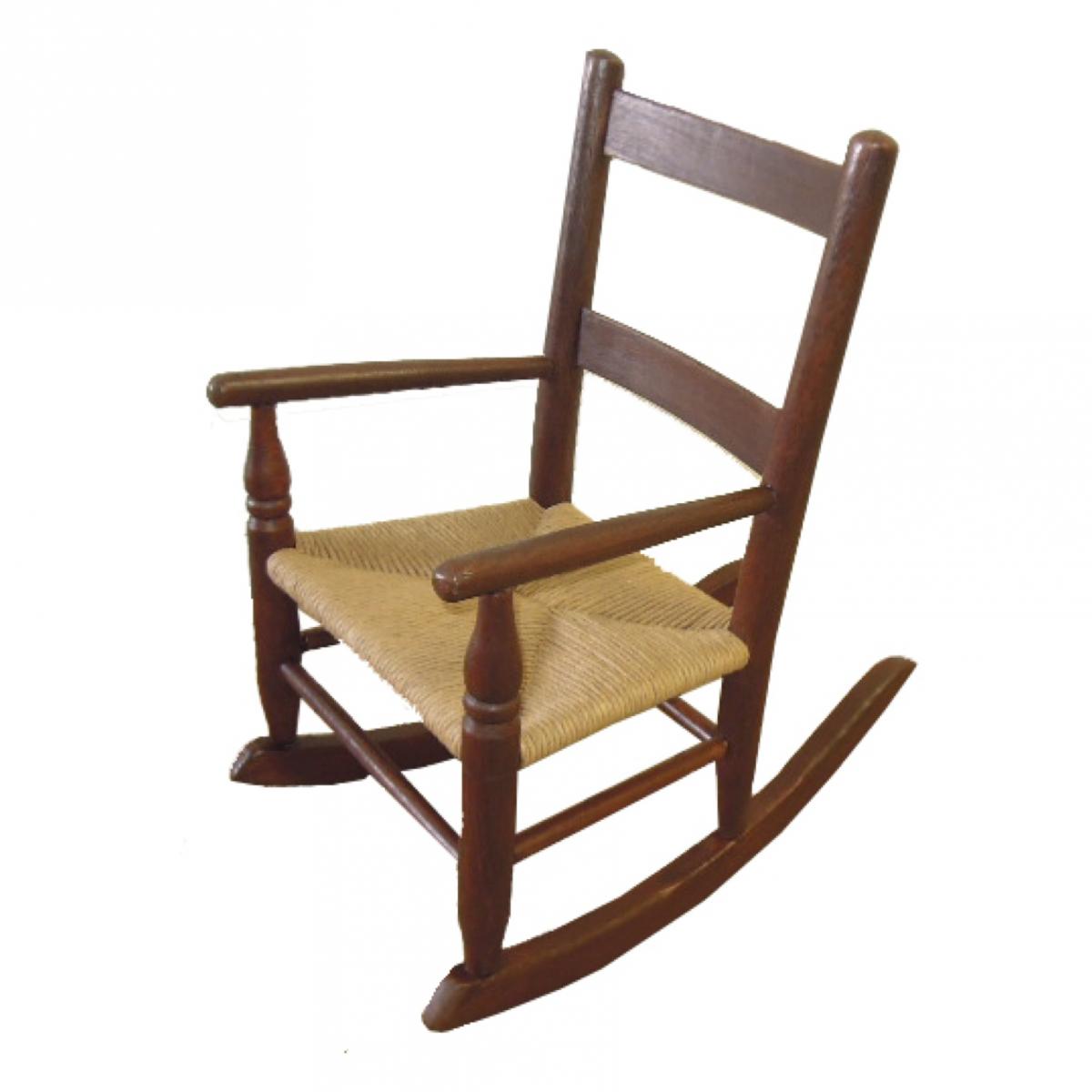 Natural Rush is the original material for rush weaving, and is typically reserved for fine antiques for authenticity. It is more labor intensive and therefore more expensive than paper rush. Natural Rush was historically used for Shaker style chairs, ladder-backs, Hitchcock chairs.
Paper Rush (AKA Fiber Rush) is a man-made twisted paper product that closely resembles Natural Rush. It is used most often in newer or in chairs of lesser value. It’s cheaper and easier to use than cattail leaves or bulrush.
Paper twist or paper rush comes in a continuous strand and is very durable, lasting considerably longer than natural rush. It’s frequently used to weave seats on Colonial style, mule-ear style and other post and rail modern chair seats, and also used in weaving wicker furniture from the 1910s-1940s.
Cats and rabbits like to use Rush corded seats as their scratching board 🙂
Click here to view our other caning techniques.
Natural Rush is the original material for rush weaving, and is typically reserved for fine antiques for authenticity. It is more labor intensive and therefore more expensive than paper rush. Natural Rush was historically used for Shaker style chairs, ladder-backs, Hitchcock chairs.
Paper Rush (AKA Fiber Rush) is a man-made twisted paper product that closely resembles Natural Rush. It is used most often in newer or in chairs of lesser value. It’s cheaper and easier to use than cattail leaves or bulrush.
Paper twist or paper rush comes in a continuous strand and is very durable, lasting considerably longer than natural rush. It’s frequently used to weave seats on Colonial style, mule-ear style and other post and rail modern chair seats, and also used in weaving wicker furniture from the 1910s-1940s.
Cats and rabbits like to use Rush corded seats as their scratching board 🙂
Click here to view our other caning techniques.
Natural Rush is the original material for rush weaving, and is typically reserved for fine antiques for authenticity. It is more labor intensive and therefore more expensive than paper rush. Natural Rush was historically used for Shaker style chairs, ladder-backs, Hitchcock chairs.
Paper Rush (AKA Fiber Rush) is a man-made twisted paper product that closely resembles Natural Rush. It is used most often in newer or in chairs of lesser value. It’s cheaper and easier to use than cattail leaves or bulrush.
Paper twist or paper rush comes in a continuous strand and is very durable, lasting considerably longer than natural rush. It’s frequently used to weave seats on Colonial style, mule-ear style and other post and rail modern chair seats, and also used in weaving wicker furniture from the 1910s-1940s.
Cats and rabbits like to use Rush corded seats as their scratching board 🙂
Click here to view our other caning techniques.WICKER
Wicker caning is the most widely used type of caning. We re-cane furniture using all types of wicker design, including the Traditional Weave, Modern Open Weave and Modern Closed Weave. Get a quote to re-cane your furniture!
Cane, like wicker and rattan, is a product of the rattan plant, a type of climbing palm. The exterior of the plant is processed to make cane, while the interior, a pithy material, is used for wicker. Most rattan suitable for furniture is imported from Indonesia, Malaysia, and Sumatra.
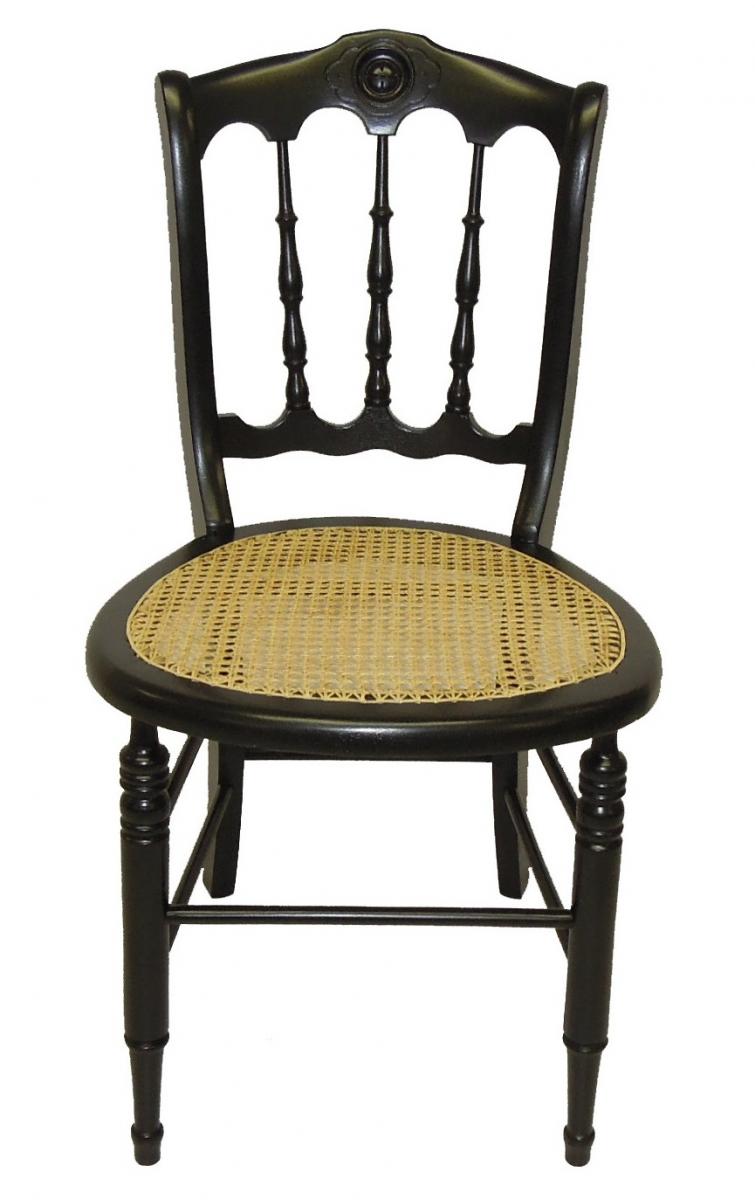 Hand Caning: This chair was caned using the hand or strand caning method, also known as the “7-Step Method Chair Caning” or “6-Way” traditional strand cane weaving pattern. It’s one of the most reliable and strongest designs for everyday use.
Hand caning is woven by hand with individual strands of cane, through holes drilled in the perimeter of the seat, thereby creating the familiar octagon (8-sided), pattern.
Many different gauges of cane are used to suit the design of the chair and size of the drilled holes, but they all woven in the same 7-step pattern.
Mid-century designer chairs, like Marcel Breuer’s revolutionary 1928 Cesca Chair, are done using the hand-cane method today.
Hand Caning: This chair was caned using the hand or strand caning method, also known as the “7-Step Method Chair Caning” or “6-Way” traditional strand cane weaving pattern. It’s one of the most reliable and strongest designs for everyday use.
Hand caning is woven by hand with individual strands of cane, through holes drilled in the perimeter of the seat, thereby creating the familiar octagon (8-sided), pattern.
Many different gauges of cane are used to suit the design of the chair and size of the drilled holes, but they all woven in the same 7-step pattern.
Mid-century designer chairs, like Marcel Breuer’s revolutionary 1928 Cesca Chair, are done using the hand-cane method today.
 While hand-caning lasts twice as long as machine caning, it is also 3 times the price. Machine caning is a viable option if your furniture does not have significant sentimental or monetary value.
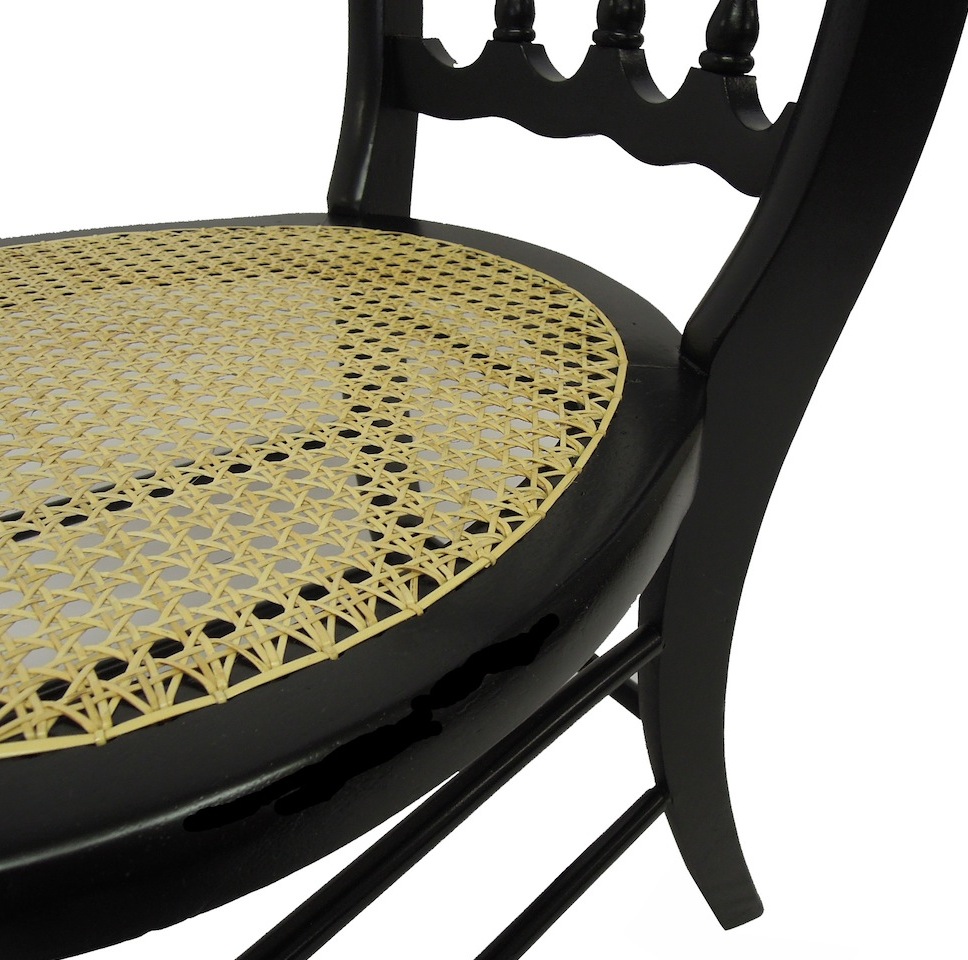
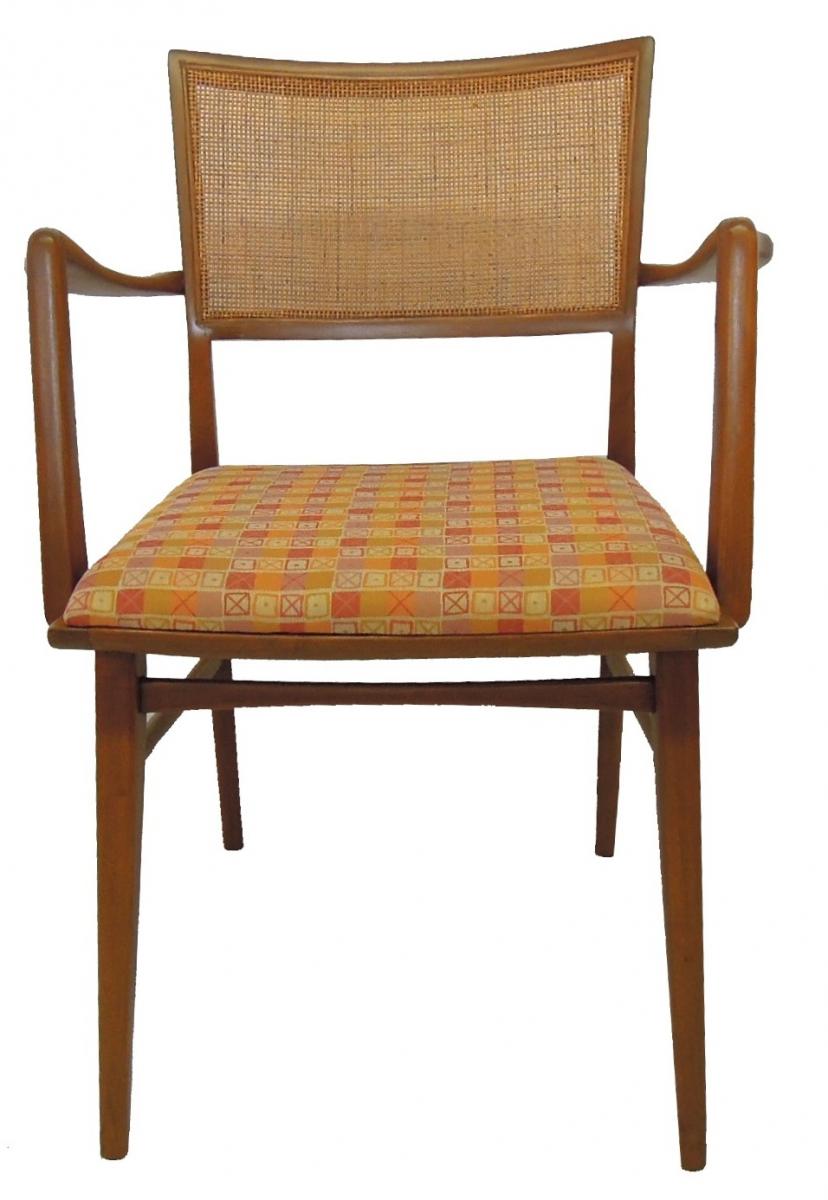 Machine Caning: This chair back was machine-caned using the Modern Open Weave rattan sheet. It is great for indoor and outdoor use, as it doesn’t get affected by damp or humid conditions.
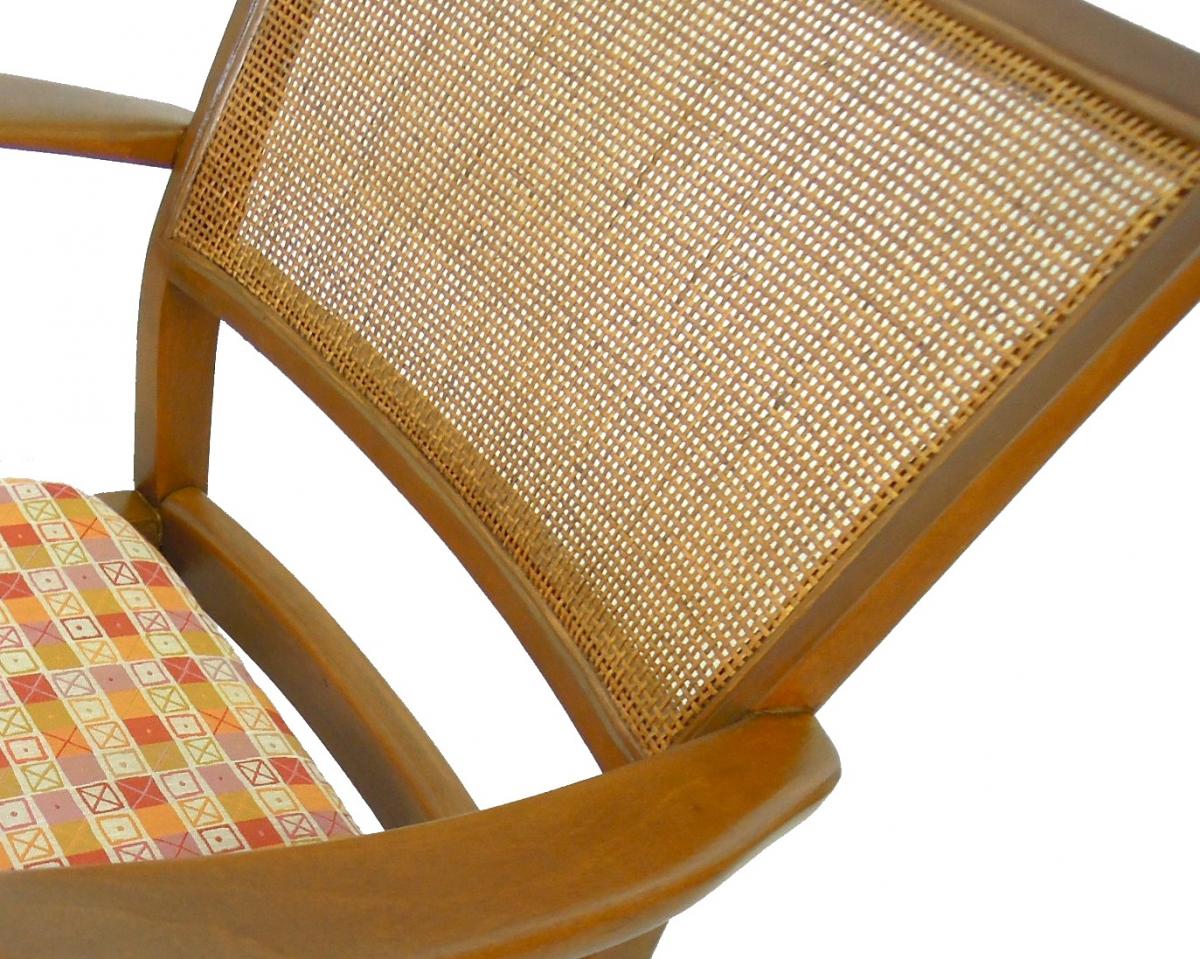
Machine cane is woven into sheets, and then the pre-woven panels are attached to a chair frame. A furrow is created in the wood, and the cane panel is set in the furrow and glued. The excess is trimmed, then a piece of reed, called a spline, is tapped into place to secure the cane. The panel is sanded, then burned with a torch to singe away any hairs or imperfections.
The main visual difference between hand cane and machine caned is the 1/8″ wide spline around the border of the seat (or back, in this case). Yes, we reupholstered the chair seat too 🙂
Machine Caning: This chair back was machine-caned using the Modern Open Weave rattan sheet. It is great for indoor and outdoor use, as it doesn’t get affected by damp or humid conditions.
Machine cane is woven into sheets, and then the pre-woven panels are attached to a chair frame. A furrow is created in the wood, and the cane panel is set in the furrow and glued. The excess is trimmed, then a piece of reed, called a spline, is tapped into place to secure the cane. The panel is sanded, then burned with a torch to singe away any hairs or imperfections.
The main visual difference between hand cane and machine caned is the 1/8″ wide spline around the border of the seat (or back, in this case). Yes, we reupholstered the chair seat too 🙂
 Is your furniture made with other types of caning? Click here to view our other caning methods.
Hand Caning: This chair was caned using the hand or strand caning method, also known as the “7-Step Method Chair Caning” or “6-Way” traditional strand cane weaving pattern. It’s one of the most reliable and strongest designs for everyday use.
Hand caning is woven by hand with individual strands of cane, through holes drilled in the perimeter of the seat, thereby creating the familiar octagon (8-sided), pattern.
Many different gauges of cane are used to suit the design of the chair and size of the drilled holes, but they all woven in the same 7-step pattern.
Mid-century designer chairs, like Marcel Breuer’s revolutionary 1928 Cesca Chair, are done using the hand-cane method today.
While hand-caning lasts twice as long as machine caning, it is also 3 times the price. Machine caning is a viable option if your furniture does not have significant sentimental or monetary value.
Machine Caning: This chair back was machine-caned using the Modern Open Weave rattan sheet. It is great for indoor and outdoor use, as it doesn’t get affected by damp or humid conditions.
Machine cane is woven into sheets, and then the pre-woven panels are attached to a chair frame. A furrow is created in the wood, and the cane panel is set in the furrow and glued. The excess is trimmed, then a piece of reed, called a spline, is tapped into place to secure the cane. The panel is sanded, then burned with a torch to singe away any hairs or imperfections.
The main visual difference between hand cane and machine caned is the 1/8″ wide spline around the border of the seat (or back, in this case). Yes, we reupholstered the chair seat too 🙂
Is your furniture made with other types of caning? Click here to view our other caning methods.